
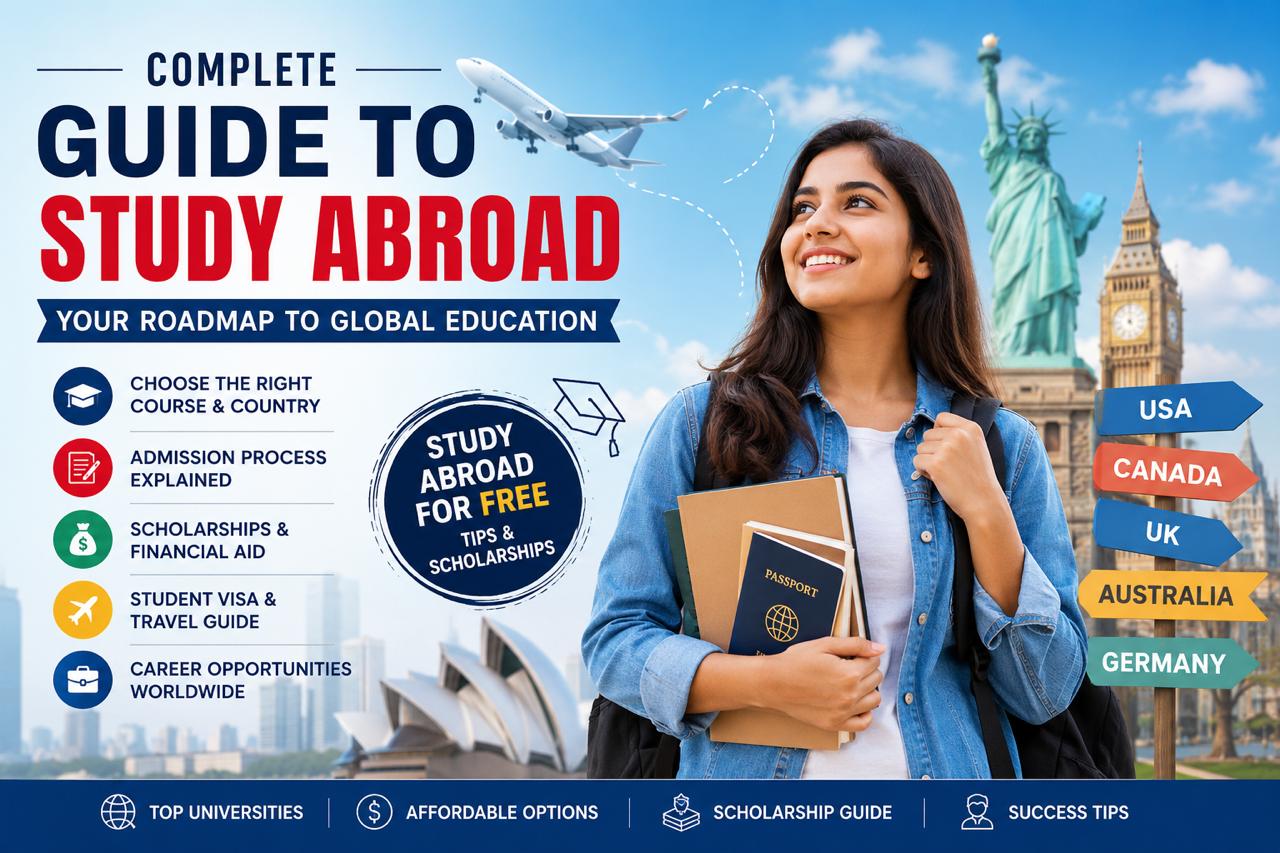
How to Go Abroad for Studies: Ultimate Guide for Indian Students
How to Go Abroad for Studies is a question that thousands of Indian students ask every year while planning their future education. Studying in another country provides access to world-class universities, global exposure, advanced learning opportunities, and better career prospects. However, the process involves multiple steps, including choosing the right country, meeting admission requirements, arranging finances, and obtaining a student visa.
This comprehensive guide explains everything students need to know before starting their international education journey.
Why Study Abroad?
One of the main reasons students explore international education is the opportunity to receive a globally recognized degree. Universities abroad often offer modern teaching methods, practical learning experiences, and industry-focused programs that prepare students for competitive careers.
Understanding How to Go Abroad for Studies can help students make informed decisions and avoid common mistakes during the application process. Apart from academic benefits, studying overseas also helps develop communication skills, independence, and cultural awareness.
Benefits of International Education
- Access to top-ranked universities
- Better employment opportunities
- Exposure to diverse cultures
- Global networking opportunities
- Advanced research facilities
- Improved personal and professional growth
These advantages make studying abroad a valuable investment for long-term success.
Choosing the Right Country and University
The first step in learning How to Go Abroad for Studies is selecting the most suitable destination and institution. Different countries offer unique advantages depending on your career goals, budget, and preferred field of study.
Factors to Consider
- Tuition fees and living costs
- University rankings and reputation
- Availability of scholarships
- Post-study work opportunities
- Immigration policies
- Language and lifestyle
Popular Study Destinations
United States – Known for prestigious universities and extensive program options.
Canada – Offers affordable education, quality institutions, and student-friendly immigration pathways.
United Kingdom – Popular for shorter degree durations and internationally respected qualifications.
Germany – Attracts students with low-cost education and strong engineering programs.
Australia – Provides excellent academic standards and career opportunities.
Researching these destinations carefully will help you determine the best fit for your educational objectives.
Understanding Admission Requirements
A crucial part of How to Go Abroad for Studies involves understanding university admission criteria. Every institution may have specific requirements, but most follow similar application standards.
Common Requirements
- Bachelor’s degree from a recognized institution
- Academic transcripts
- English language proficiency scores
- Statement of Purpose (SOP)
- Letters of Recommendation (LORs)
- Updated resume or CV
- Relevant work experience for certain programs
Preparing these documents early can improve your chances of receiving admission offers from leading universities.
Entrance Exams You May Need
When researching How to Go Abroad for Studies, students often discover that many universities require standardized test scores.
English Language Tests
- IELTS
- TOEFL
- PTE Academic
These exams evaluate English proficiency and are required by most institutions where English is the primary language of instruction.
Graduate Admission Tests
- GMAT for MBA and management programs
- GRE for various master’s and graduate-level courses
Strong scores can enhance your application and increase scholarship opportunities.
Important Documents for Applications
Proper documentation is essential during the admission process. Missing paperwork can lead to delays or application rejection.
Documents Checklist
- Valid passport
- Academic certificates
- Official transcripts
- Statement of Purpose
- Letters of Recommendation
- Resume or CV
- Test score reports
- Financial documents
Organizing these documents beforehand makes the application process much smoother.
Scholarships and Financial Assistance
Many students worry about the cost of international education. Fortunately, there are several funding opportunities available. Knowing How to Go Abroad for Studies also means understanding how to reduce educational expenses through scholarships.
Types of Scholarships
Merit-Based Scholarships
Awarded to students with exceptional academic performance.
Need-Based Scholarships
Designed to support students with financial constraints.
Government Scholarships
Provided by governments to encourage international education.
University Scholarships
Offered directly by institutions based on academic achievement and leadership qualities.
Applying for multiple scholarships can significantly reduce tuition fees and living expenses.
Planning Your Budget
Financial planning plays an important role in How to Go Abroad for Studies. Students should estimate their total expenses before applying.
Common Expenses
- Tuition fees
- Accommodation
- Food and groceries
- Transportation
- Health insurance
- Books and study materials
Students can manage costs through education loans, scholarships, savings, and part-time work opportunities where permitted.
Student Visa Application Process
After receiving an admission letter, the next step is obtaining a student visa. This stage is critical because approval allows you to begin your studies abroad.
General Visa Process
- Accept the university offer.
- Arrange proof of financial support.
- Complete the visa application.
- Submit required documents.
- Attend biometric appointments or interviews if required.
- Await visa approval.
Learning How to Go Abroad for Studies includes understanding visa timelines and applying well before course commencement dates.
Tips for a Successful Application
Students who plan early often experience a smoother admission process.
Best Practices
- Research universities thoroughly
- Maintain strong academic performance
- Prepare for exams early
- Write a compelling SOP
- Apply for scholarships simultaneously
- Meet all application deadlines
Following these strategies can improve your chances of acceptance.
Common Mistakes to Avoid
While exploring How to Go Abroad for Studies, many students make avoidable errors that can affect their applications.
Frequent Mistakes
- Applying at the last minute
- Ignoring scholarship opportunities
- Weak preparation for entrance exams
- Submitting incomplete documents
- Selecting universities without proper research
- Underestimating living expenses
Avoiding these mistakes can save both time and money.
Conclusion
How to Go Abroad for Studies becomes much easier when students follow a structured approach and prepare in advance. From choosing the right university and meeting admission requirements to securing scholarships and obtaining a visa, every step contributes to a successful study-abroad journey. With careful planning, strong applications, and financial preparation, Indian students can achieve their dream of earning an international degree and building a rewarding global career.