
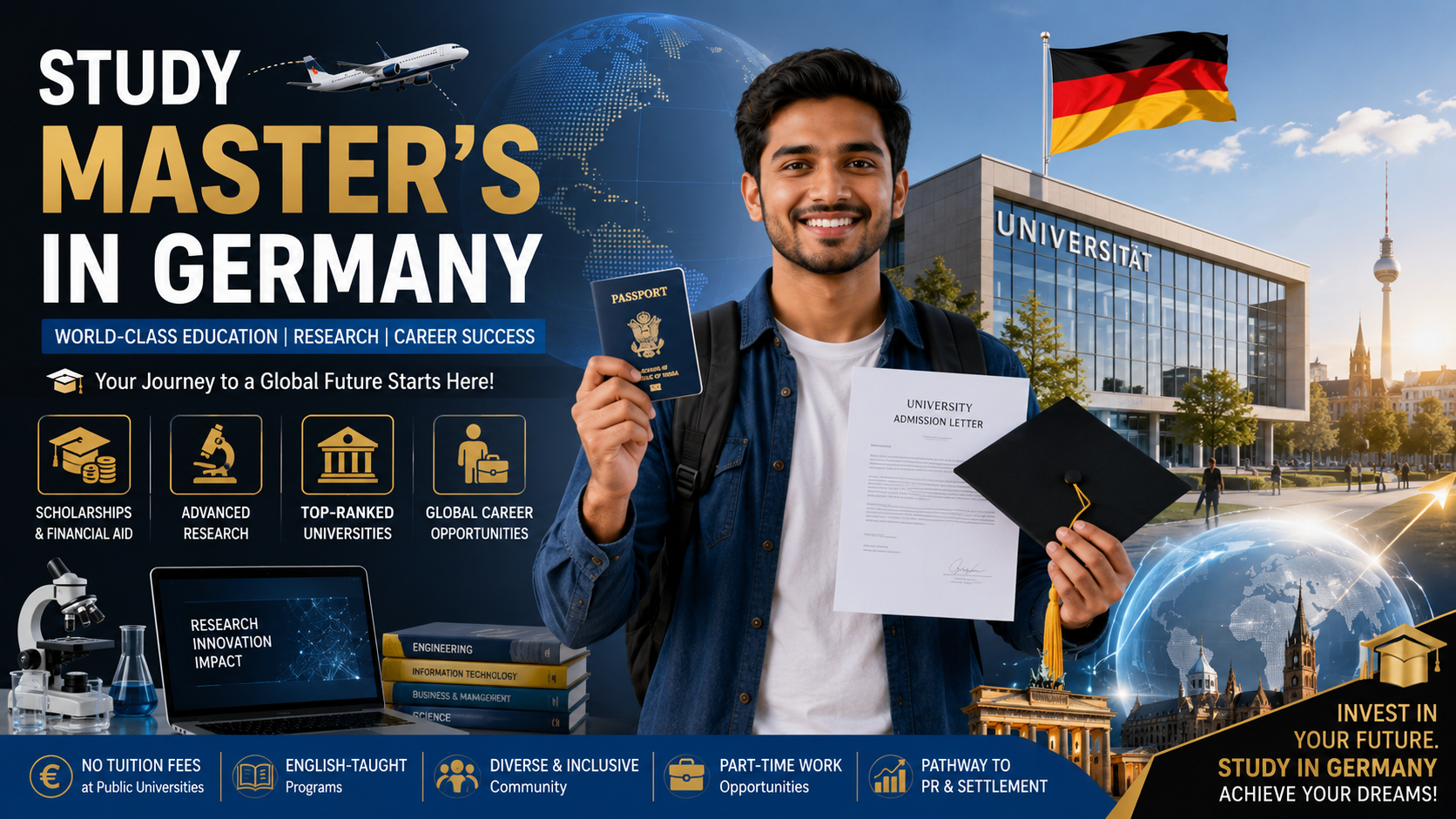
Master’s in Germany: Complete Guide for International Students in 2026
Germany has become one of the most sought-after destinations for international students pursuing a master’s degree. Known for its world-class universities, affordable education, cutting-edge research facilities, and strong job market, Germany offers exceptional opportunities for students looking to advance their academic and professional careers.
Whether you want to pursue Engineering, Computer Science, Business, Data Science, Healthcare, or Artificial Intelligence, Germany provides globally recognized master’s programs designed to meet international standards.
Why Choose a Master’s in Germany?
Germany attracts thousands of international students every year due to its excellent education system and career opportunities.
Benefits of Studying a Master’s in Germany
- Globally recognized universities
- Affordable or low tuition fees
- Strong research opportunities
- High-quality education
- International student-friendly environment
- Access to Europe’s largest economy
- Post-study work opportunities
- Excellent career prospects
Top Reasons to Study in Germany
1. Affordable Education
Many public universities in Germany charge little to no tuition fees for international students.
2. World-Class Universities
Leading universities include:
- Technical University of Munich
- Ludwig Maximilian University of Munich
- Heidelberg University
- RWTH Aachen University
- Karlsruhe Institute of Technology
3. Research and Innovation
Germany is a global leader in engineering, automotive technology, healthcare, renewable energy, and scientific research.
4. Strong Employment Market
Graduates benefit from excellent employment opportunities in Germany and across Europe.
Popular Master’s Courses in Germany
Engineering
- Mechanical Engineering
- Automotive Engineering
- Civil Engineering
- Electrical Engineering
Computer Science & IT
- Data Science
- Artificial Intelligence
- Cybersecurity
- Software Engineering
Business & Management
- MBA
- International Business
- Finance
- Marketing
Healthcare & Life Sciences
- Public Health
- Biotechnology
- Healthcare Management
- Biomedical Sciences
Emerging Fields
- Renewable Energy
- Robotics
- Machine Learning
- Supply Chain Management
Eligibility Requirements for Master’s in Germany
Academic Qualifications
Applicants generally require:
- A recognized bachelor’s degree
- Relevant academic background
- Good academic performance
Language Requirements
Depending on the program:
English-Taught Programs
Accepted tests include:
- IELTS
- TOEFL
- PTE Academic
German-Taught Programs
Students may need:
- TestDaF
- Goethe-Zertifikat
- DSH Certification
Admission Requirements
Most universities require:
- Bachelor’s degree certificate
- Academic transcripts
- Passport
- Statement of Purpose (SOP)
- Letters of Recommendation (LOR)
- Updated Resume/CV
- Language proficiency scores
- Portfolio (for certain courses)
Cost of Studying a Master’s in Germany
Tuition Fees
| Institution Type | Approximate Cost |
|---|---|
| Public Universities | Low or no tuition fees |
| Private Universities | €5,000 – €20,000+ per year |
Living Expenses
Students should budget for:
- Accommodation
- Food
- Transportation
- Health insurance
- Internet
- Personal expenses
Estimated monthly cost:
- €850 – €1,400
Scholarships for Master’s Students in Germany
Several scholarship opportunities are available for international students.
Types of Scholarships
- Merit-based scholarships
- Government-funded scholarships
- Research scholarships
- University scholarships
- International student grants
Scholarship Benefits
- Tuition fee support
- Monthly living allowance
- Travel grants
- Health insurance support
Germany Student Visa Requirements
International students generally need:
- University admission letter
- Valid passport
- Financial proof
- Health insurance
- Accommodation details
- Visa application documents
Best Cities for Master’s Students
Berlin
Germany’s startup and innovation hub.
Munich
Home to top-ranked universities and multinational companies.
Hamburg
Known for research and international business opportunities.
Frankfurt
A major financial center in Europe.
Stuttgart
Popular for engineering and automotive industries.
Career Opportunities After a Master’s in Germany
Graduates can pursue careers in:
- Information Technology
- Artificial Intelligence
- Engineering
- Finance
- Healthcare
- Research and Development
- Business Management
Average Salary Expectations
Master’s graduates often enjoy competitive salaries depending on industry, experience, and location.
Post-Study Work Opportunities
Germany offers favorable opportunities for international graduates to stay and seek employment after completing their studies.
Benefits include:
- Access to Europe’s job market
- Skilled worker opportunities
- Long-term career growth
- Potential pathways to permanent residency
Tips for International Students
- Apply early to universities.
- Prepare a strong SOP.
- Research scholarship opportunities.
- Learn basic German language skills.
- Budget for living expenses.
- Verify university accreditation.
Conclusion
A Master’s in Germany offers international students an outstanding combination of academic excellence, affordable education, research opportunities, and strong career prospects. With globally recognized universities, innovative industries, and a high quality of life, Germany remains one of the best destinations for postgraduate education in 2026.