
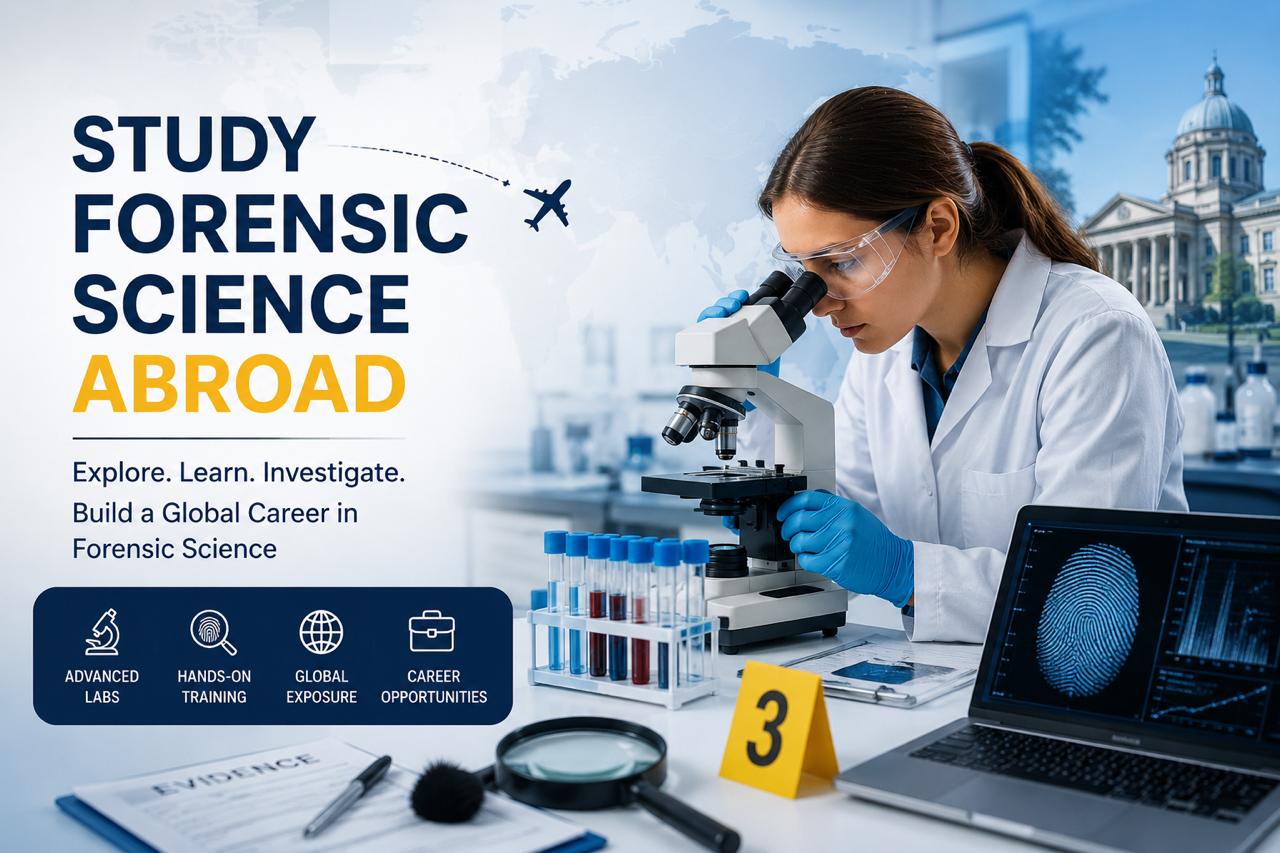
Study Forensic Science Abroad: A Complete Guide for International Students
Forensic science is a fascinating field where science meets law and criminal investigation. From analyzing DNA evidence to uncovering clues at a crime scene, forensic professionals play a vital role in helping the justice system solve complex cases. With the increasing demand for skilled forensic experts worldwide, studying forensic science abroad has become an excellent option for students seeking advanced education, modern laboratory experience, and global career opportunities.
Many universities abroad offer specialized programs with access to cutting-edge technology, experienced faculty, and practical training. Whether you want to pursue a BSc in Forensic Science or an MSc in Forensic Science abroad, international education can provide the skills and exposure needed to build a successful career.
Why Study Forensic Science Abroad?
Choosing to study forensic science abroad offers several advantages beyond obtaining a degree. International universities focus on research, practical learning, and industry-based training, helping students gain real-world experience.
Some key benefits include:
- Access to advanced forensic laboratories and modern scientific equipment.
- Learning from experienced forensic scientists and researchers.
- Exposure to international criminal justice systems and forensic practices.
- Opportunities for internships, research projects, and professional networking.
- Better career prospects in government agencies, private laboratories, and research organizations.
Studying in a globally recognized institution also enhances your resume and opens doors to opportunities across different countries.
Top Countries to Study Forensic Science Abroad
United States
The USA is one of the most popular destinations for forensic science studies due to its world-class universities, advanced research facilities, and strong connections with law enforcement agencies. Students can specialize in areas such as forensic biology, forensic chemistry, toxicology, and digital forensics.
United Kingdom
The UK offers highly respected forensic science programs with a strong emphasis on practical skills and scientific investigation. Many universities provide laboratory-based learning, crime scene simulation, and industry placements.
Australia
Australia is known for its high-quality education system and modern forensic research facilities. Students receive practical training and can explore career opportunities in forensic laboratories, government departments, and scientific research organizations.
Canada
Canada provides affordable and high-quality forensic science education with excellent research opportunities. Its universities focus on hands-on learning, analytical techniques, and scientific problem-solving.
Germany
Germany has gained popularity among international students due to its excellent research infrastructure, affordable education options, and strong focus on science and technology.
BSc Forensic Science Colleges Abroad
Students who wish to begin their journey after completing high school can choose a BSc Forensic Science abroadprogram. These undergraduate courses generally cover subjects such as:
- Criminalistics
- Forensic Biology
- Chemistry
- DNA Analysis
- Toxicology
- Crime Scene Investigation
- Fingerprint and Trace Evidence Analysis
A bachelor’s degree typically takes three to four years to complete, depending on the country and university.
MSc Forensic Science in Abroad: Advanced Specialization
For students looking to deepen their expertise, pursuing an MSc in Forensic Science abroad is an excellent choice. A master’s degree allows students to specialize in advanced areas such as:
- Forensic Genetics and DNA Profiling
- Forensic Toxicology
- Digital and Cyber Forensics
- Forensic Anthropology
- Forensic Chemistry
- Advanced Crime Scene Investigation
Most MSc programs take one to two years and include research projects, laboratory work, or industry internships.
Eligibility Requirements to Study Forensic Science Abroad
The admission requirements vary by university and country, but students generally need:
For BSc Forensic Science:
- Completion of 12th grade with science subjects such as Biology, Chemistry, or Physics.
- Good academic scores.
- English language proficiency tests such as IELTS or TOEFL (where required).
For MSc Forensic Science:
- A bachelor’s degree in forensic science or a related field like biology, chemistry, or biotechnology.
- Academic transcripts and recommendation letters.
- A statement of purpose (SOP) and English language test scores.
Cost of Studying Forensic Science Abroad
The cost of studying forensic science abroad depends on the country, university, and course level. On average:
- USA: ₹20–₹50 lakh per year
- UK: ₹15–₹35 lakh per year
- Australia: ₹18–₹40 lakh per year
- Canada: ₹12–₹30 lakh per year
- Germany: Low or no tuition fees at many public universities, with living expenses applying.
Students can also apply for scholarships, grants, and financial aid programs to reduce the overall cost of education.
Career Opportunities After Studying Forensic Science Abroad
A degree in forensic science opens doors to various exciting career paths, including:
- Forensic Scientist
- Crime Scene Investigator
- DNA Analyst
- Forensic Toxicologist
- Digital Forensic Analyst
- Forensic Laboratory Technician
- Research Scientist
- Quality Control Specialist
Graduates can work with government forensic departments, police organizations, private laboratories, healthcare sectors, and research institutions.
How to Choose the Right Forensic Science University Abroad
Before selecting a university, students should consider factors such as:
- University ranking and accreditation.
- Availability of specialized forensic programs.
- Laboratory facilities and research opportunities.
- Internship and placement support.
- Tuition fees and living costs.
- Post-study work opportunities in the country.
Researching these aspects will help students find a program that matches their academic interests and career goals.